
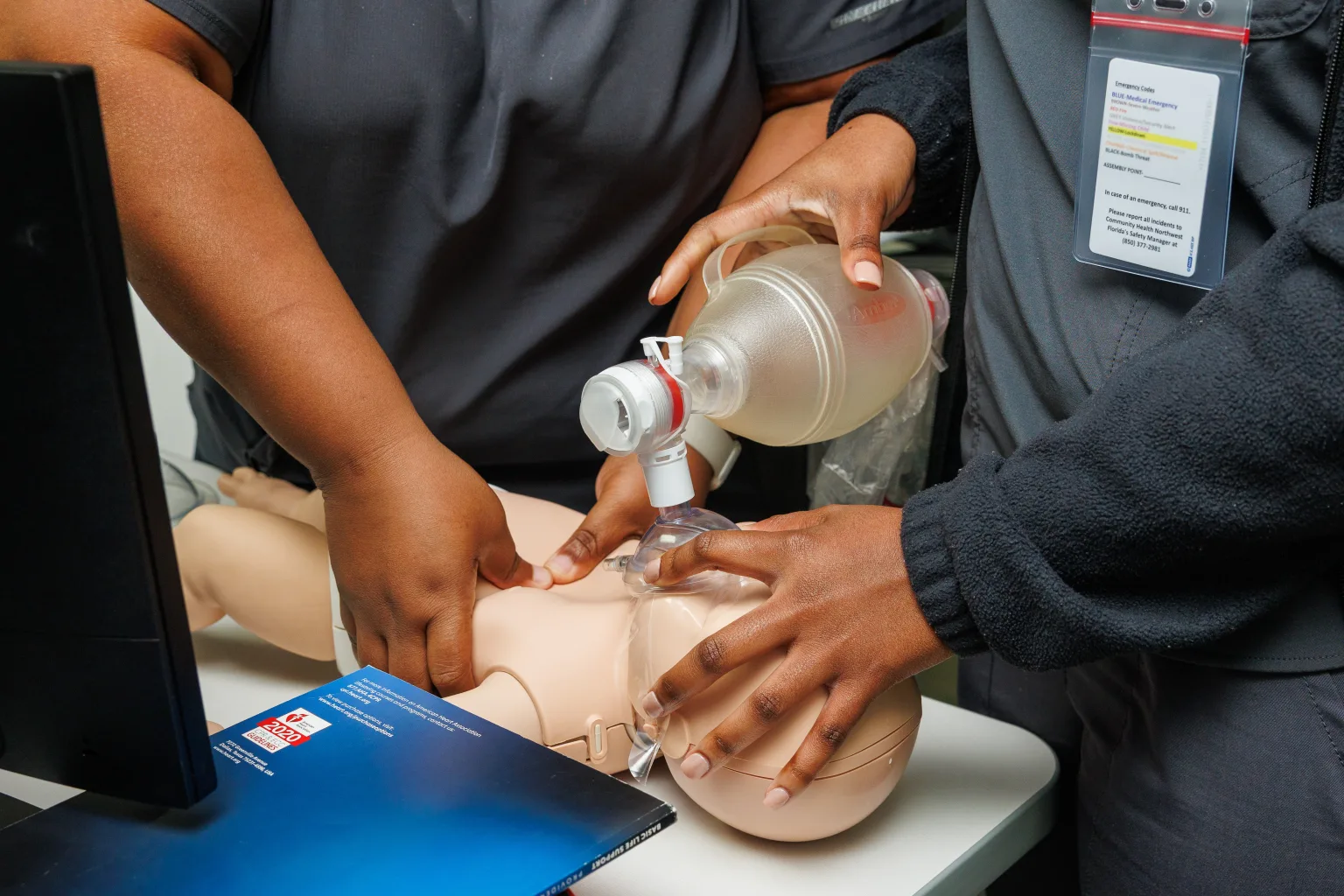
Chest compressions and breathing are extremely important if an infant is in distress.
November is CPR Awareness Month. Not that you should need a specific month to learn a life-saving technique, but there’s no better time than the present.
We caught up with Community Health Northwest Florida Case Manager Stacy McKenzie to refresh ourselves on the latest when it comes to CPR and why it’s still so important to learn.
What is the main reason someone should learn Cardiopulmonary Resuscitation?
Cardiac arrest is the leading cause of death in many countries. Without immediate treatment it can result in brain injury, or even death, due to a lack of oxygen reaching the brain.
How do you know if someone needs CPR?
If a victim is unresponsive or has no pulse, or if they’re not breathing, then you’ll want to begin CPR.
Is there anything you should do before starting on CPR?
Check for scene safety. See if the victim is breathing and has a pulse. And make sure someone calls 911.

Stacy McKenzie oversees an internal CPR class at the Community Health Northwest Florida Palafox office.
What’s the youngest age someone should learn CPR?
As early as 4 years old. They can start learning the steps, the hand placement, the rhythm — and when to call 911.
Each year, more than 350,000 Americans die from cardiac arrest. Immediate CPR can double or triple the chances of survival, according to the American Heart Association. For more, visit the AHA.
Is it true that you can give CPR even if the person is still conscious? When should you actually perform CPR?
If a person is unconscious, has no pulse and isn’t breathing, start CPR right away. If they’re unconscious and not breathing but still have a pulse, you’ll give rescue breaths.
When should you stop using CPR?
If the victim has a pulse and is breathing normally, or when emergency services arrive.
Is there any reason you should not perform CPR on someone? Can they be too young or too old?
It doesn’t matter the age. We teach child, infant and adult CPR here at Community Health.
Do you have to do mouth-to-mouth resuscitation?
Breaths are very important for infants because cardiac arrest is usually due to respiratory complications.
What should you do if you’re alone and don’t yet know how to properly perform CPR?
Call 911 and perform hands-only CPR. Push hard and fast in the center of the chest until emergency services arrive.